
BLACK THERAPIST IN NYC — ONLINE ACROSS NY · FL · D.C.
A Black therapist who won't need it explained.
Not the code-switching. Not what it costs to be the only one in the room, or the third thing you rehearsed before you said the first. Not the exhaustion of being called strong by people who never once asked if you're okay.
You've done enough explaining.
Online therapy for Black and African American adults across New York, Florida, and Washington D.C. — no waitlist.No waitlist. Most people start within a week.
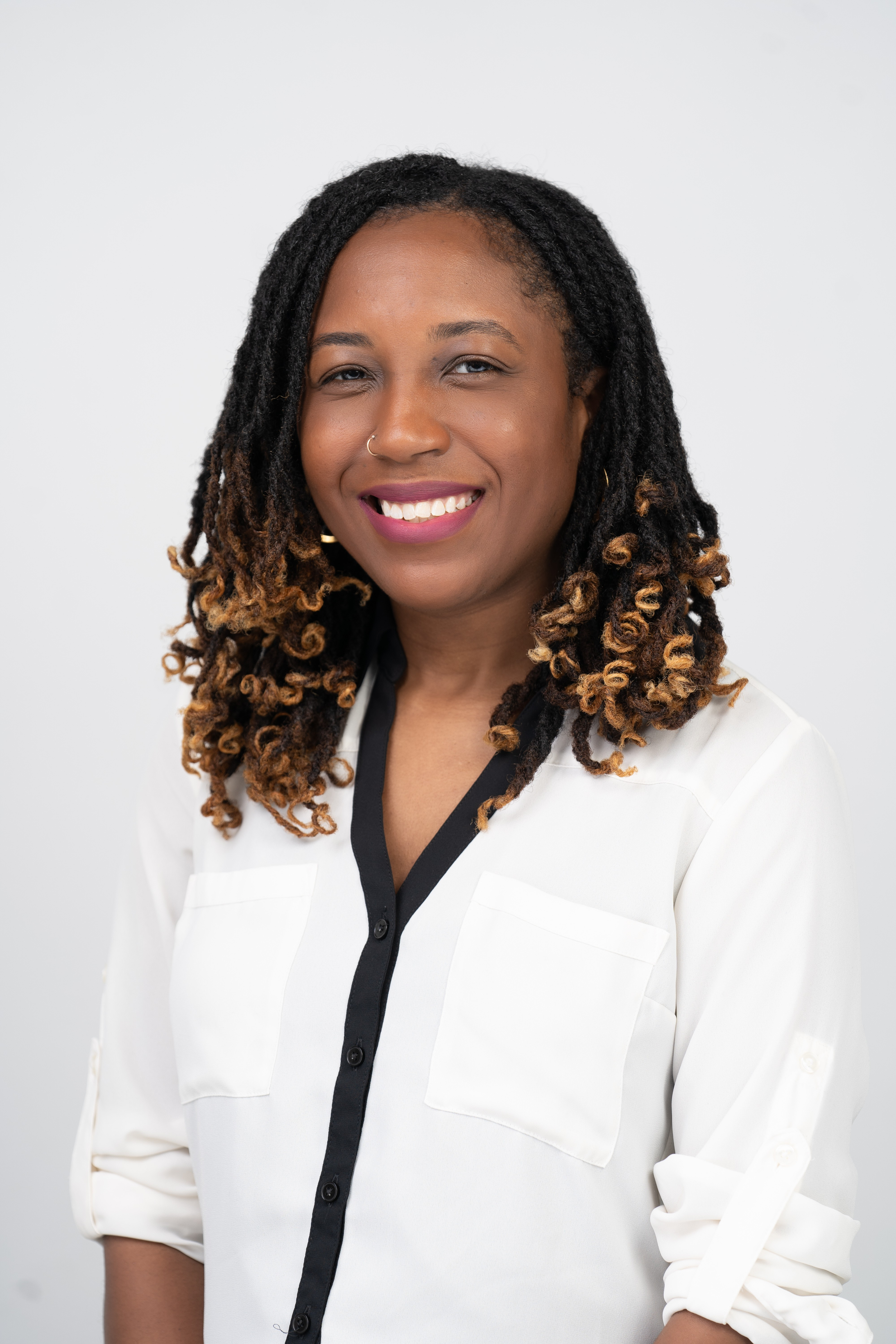
— WHAT IT LOOKS LIKE —
Doing well, and running on nothing
I carried untreated anxiety and chronic stress the way a lot of Black women do — quietly, while achieving.
That's the version that doesn't get caught. Nobody intervenes when the work is getting done. Nobody asks how you are when you're the one they come to. And the better you handle it, the less anyone looks.
What people bring me
- Being called strong so often it stopped being a compliment and started being a job description
- Rehearsing sentences before meetings, then rehearsing them again afterward
- Code-switching so automatically you're not sure what your own voice sounds like
- Sacred rage you can't put anywhere, because the cost of showing it is too high
- Being the only one in the room, and managing how everyone else feels while you're in it
- Achieving the thing and feeling nothing, then feeling guilty about feeling nothing
- Never having been asked, by anyone, what you needed
What's underneath it
- Struggling with vulnerability, and with asking for help at all
- Not trusting that anyone could actually help — you've been disappointed before and fixed it yourself anyway
- Staying quiet about what you really think and feel until you hit the wall, and it comes out all at once
- People-pleasing, learned from years of being made into the strong one — and from watching the women before you be nothing else
- Being stuck in the family role — the caretaker, the parentified child, the hero — and not knowing how to put it down
- Perfectionism that started in a classroom, where being twice as good was the price of being there
- Exhaustion and numbness you cope with by producing more, not less
- Autism, ADHD or AuDHD, undiagnosed or found out late
- Perimenopause or menopause changing your body, your sleep and your moods faster than you can keep up with — and going through it with almost no one to ask
- Difficulty with closeness — emotional, physical, spiritual, sexual
- Relationships shaped by old hurt, dating anxiety, and a way of connecting you never chose
- Not being able to slow down. Not being able to rest.
Mammy. Jezebel. Sapphire. Superwoman.
Four roles, and every one of them a way of not being seen.
When we don't fit any of them, we get treated as other — including by folks in our community. That's a specific loneliness, and it comes up in this room more than almost anything else.
The sacred rage has somewhere to come from: colorism, texturism, featurism, sexism, anti-Blackness, racism, and the particular sting of educational privilege used against you.
None of that shows up on a performance review. It shows up in your body, in your sleep, and in how much of yourself you have left by Friday.
— WHEN YOU'RE NOT BELIEVED —
Being disbelieved about your own body is its own injury
A lot of my clients have a version of this story. Something was wrong. They said so. It took years to be taken seriously.
I have one too.
I pushed through untreated anxiety and years of running on empty while my body was telling me something was wrong. It took fibroids to make me stop.
The research
The research says what my clients already know.
By age 50, more than 80% of Black women will be diagnosed with fibroids, compared with about 70% of white women. But prevalence isn't the striking part. Black women develop them earlier, have more severe symptoms, and wait longer to be believed.
A 2021 study in Women's Health Issues found Black women's fibroid pain and bleeding minimized by providers — and that the mistrust this produced made women reluctant to go back at all. A Cedars-Sinai study found Black women significantly less likely to receive minimally invasive surgery, even after accounting for income and insurance.
And in perimenopause
The same pattern shows up again in midlife.
Black women begin the menopause transition earlier than white women and stay symptomatic longer. Hot flashes and night sweats last a median of 10.1 years — nearly four years longer than the 6.5-year median for white women.
And researchers following the Study of Women's Health Across the Nation found that everyday discrimination predicts who keeps reporting symptoms over time, independent of every other known risk factor.
The stress of not being believed doesn't just sit alongside the symptoms. It appears to extend them.
And it rarely arrives alone. What comes with it, in this room:
- Autoimmune conditions that flare with chronic stress
- Anemia and iron deficiency from heavy bleeding, and the fatigue that follows
- Sleep broken by night sweats, and the mood changes nobody connects to it
- Chronic pain, including pain during sex, from fibroids or endometriosis
- Infertility, and the grief that nobody makes room for
What this means in the room: when you tell me a doctor didn't listen, I'm not going to suggest you remembered it wrong. When you say you've stopped bringing things up because it isn't worth the fight, I'll understand why. And when your body is telling you something, we take it seriously — that's what somatic work is.

— HOW I WAS TRAINED —
Therapy wasn't built with you in mind. I trained on that specifically.
I'm certified in Decolonizing Therapy for Black Folk through Kindred Community Healing. I've also trained in Beyond the Mask: Treating High-Functioning Women of Color, Desire, Dignity and Deconstruction: Exploring Black Women's Sexuality with Dr. Donna Oriowo, and Unpacking the Challenges of Autism in the Black Community.
Here's what that changes.
You can name it without preamble. Colorism, texturism, featurism, sexism, anti-Blackness, racism, the microaggressions and the ones that weren't micro at all. You won't have to establish that any of it happened, soften it so I stay comfortable, or spend the first ten minutes laying groundwork.
Your symptoms get read in context. Hypervigilance in a workplace where you're the only Black woman isn't a disorder. It's accurate threat assessment. We treat the exhaustion, not the vigilance.
Your family isn't automatically the problem. A lot of therapy training treats close-knit families as something to fix. Sometimes that's right. Often it isn't, and telling a Black woman to cut off her family is advice from someone who doesn't understand what that family is holding up.
Anger gets treated as information. Not a symptom to manage down. There are usually excellent reasons for it, and the work is finding somewhere for it to go.
Multiple identities get held together. This is an intersectional space. Black trans women, trans men and gender non-conforming clients are welcome here, and we can talk about the joy in holding more than one identity as well as the friction.
We look at what you inherited — including the good. Your family and cultural lineage, the legacy burdens that came down with it, and the healing that came down too. Both get passed on, and most therapy only asks about one.
And the systems get named. Working because stopping never felt safe. What you were taught to be. Money worry that makes complete sense given what you've watched.
I work from a liberation psychology frame. That means we can talk plainly about what has failed people here, in the Caribbean, and elsewhere — without me treating it as something wrong with your thinking.
For neurodivergent clients, we look at what you need rather than how you behave — including what masking and burnout look like in Black autistic adults specifically.
— HOW I WORK —
Mind, body, and spirit — not just the thinking part
I'm somatic, attachment, trauma, and IFS-informed, and I work with the whole person. That means we start from the body up, not the head down.
Mind
Thoughts, feelings, and the habits built around them.
Body
What you physically feel, your energy, where the trauma actually sits.
Spirit
Your faith, your higher power, your inner self, religion if that's part of your life.
That's not a wellness flourish. If you grew up reading rooms to know whether you were safe, your body learned it before you had words for it. Talking alone doesn't reach that.
We treat your patterns as protection, not problems. The composure. The over-preparing. Reading every room. Those got built for good reasons and they kept you safe.
In IFS, those are parts of you with jobs. We make room for all of them instead of trying to get rid of any, and we find out what they're guarding so they can rest where they aren't needed.
— IS THIS A FIT? —
Let's find out before you book
This is probably a fit if
- You're a Black or African American adult, and you'd rather not start by explaining what that has to do with anything
- You're tired in a way sleep doesn't fix
- You've been the strong one, the reliable one, or the only one for as long as you can remember
- You want to understand the pattern, not just get through the week
- You can commit to weekly or biweekly work over months
- The fee works for you, or the sliding scale does
And probably not if
- You need same-day or crisis care (If that's where you are, call or text 988.)
- You need to use Medicaid or Medicare — I'm not able to accept either
- You need an in-network therapist. I'm out-of-network with all plans, and I'd rather say so now than after you've booked
- You're outside New York, Florida, or Washington D.C.
- You want a short, focused piece of work rather than something that takes time
You don't have to be Black to work with me. This page exists because if you are, there's a set of things you won't have to explain first.
— WHERE MY CLIENTS ARE —
Online across New York, Florida, and Washington D.C.
All sessions are online, so where you live inside those three places doesn't matter — only that you're physically there during the appointment.
Most of my clients are in New York — Brooklyn, Queens, Manhattan, the Bronx, Long Island and Westchester. I work with Black and African American adults across the city and the state.
In Florida, across Broward and Palm Beach counties, Miami, Orlando and Jacksonville.
In Washington, D.C. — Petworth, Brightwood, Shaw, Columbia Heights, Anacostia, and anywhere else in the District.
No commute and no waiting room, which for a lot of people is the difference between going and meaning to go.
— THE DETAILS —
What it costs and how it works
| Format | Online video, 45–60 minutes |
| Frequency | Weekly to biweekly to start |
| Fee | $225, with a sliding scale from $140 |
| Insurance | Out-of-network. Superbills provided. No Medicaid or Medicare |
| Where | Anywhere in New York, Florida, or Washington D.C. |
| Languages | English and Haitian Kreyòl |
| First step | A free 20-minute consultation |
— COMMON QUESTIONS —
Questions people ask me
Where can I find a Black therapist in NYC?
Where can I find an African American therapist near me?
Do you take insurance?
Does it actually matter whether my therapist is Black?
What does "decolonizing therapy" mean in practice?
I've had a therapist who didn't get it. Why would this be different?
Do you work with Black trans and gender non-conforming clients?
I think I might be autistic or ADHD but was never diagnosed. Can we talk about that?
Do you work with Black men?
Do you work with teens or children?
— WHENEVER YOU’RE READY —
You've been handling it on your own for a long time
Twenty minutes, free, no pressure. You tell me what's going on and we work out together whether I'm the right person for it.
If I'm not, I'll say so, and I'll help you find who is.
No waitlist. Most people start within a week.