
— ABOUT —
I became a therapist because my community didn't have one who looked like us.
For anyone who's the first — first to move out, first to succeed, first to go to therapy, first to say out loud that the way things have always been done isn't working.
Jessica Thomas, LMHC, LPC (she/her) first-generation Haitian-American therapist, licensed in New York, Florida, and Washington D.C.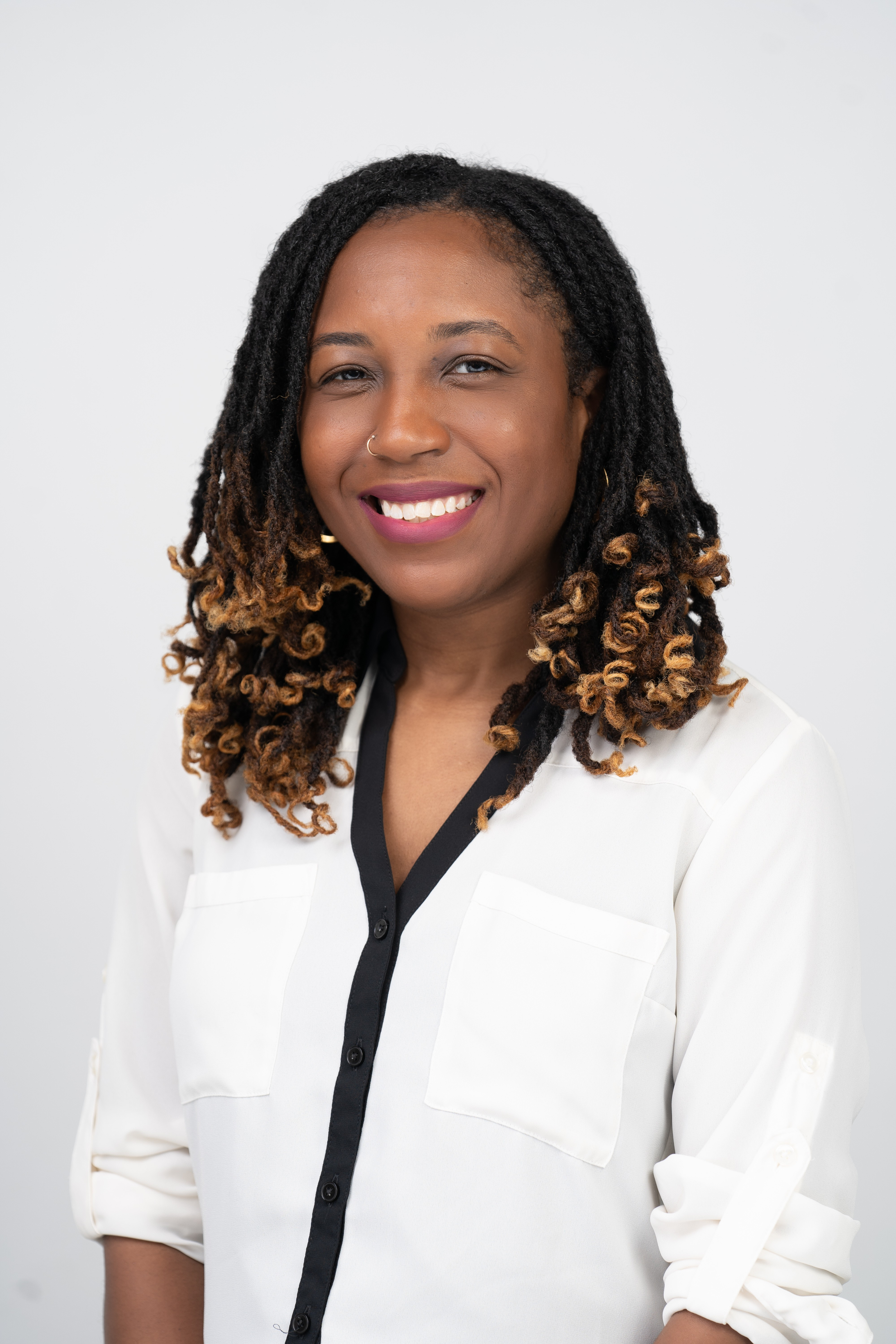
— WHY I DO THIS WORK —
I grew up watching what happens when nobody gets help
I'm first-generation Haitian-American. Growing up, I watched trauma move through families without anyone naming it — passed down, worked around, never treated. I watched people carry things for decades because getting help wasn't something our community did, and because the mental health field had almost nobody in it who looked like us or understood where we came from.
So I became the therapist I wished my community had.
Not just for Haitian folks, though they're welcome here and I practice in Kreyòl. If you're the first in your family to do this, you already know it doesn't come with instructions.
Cycle breakers. People doing something no one in their family has done before, while still holding everyone else together.
That's who this practice is for. A place to put down the stress. To get support breaking the cycle instead of just surviving it. To learn to rest, to ask for help, and to build the kind of relationships and community you didn't grow up with.
I also built it to be a place where LGBTQ+ and neurodivergent folks don't have to brace themselves. As a Black therapist, I know what it's like to feel that mental health care wasn't designed with us in mind. I wanted to make one room where that isn't true.
— WHAT I LEARNED THE HARD WAY —
I ignored my body until it made me listen.
I know the pattern I treat because I lived it. I pushed through. I took care of everyone else. I carried untreated anxiety and chronic stress the way a lot of Black women do — quietly, while achieving. I put everything into work. And I kept going past every signal my body sent, because stopping wasn't something I knew how to do.
| Then, in 2024, fibroids forced the stop.
Not a realization I came to thoughtfully. My body made the decision after years of being overruled.
What's changed since: I have a different relationship with my body now. I manage the chronic pain that comes with hormonal imbalance. I learned that rest isn't one thing — there are several kinds, and I need most of them. I make room for small joys every day, on purpose. I'm present in my own life in a way I wasn't before.
I'm not telling you this so you'll think I'm healed. I'm telling you because when you say you're exhausted and can't stop, I'm not going to nod politely from across the screen. I know what that costs, and I know how long it takes to learn the other way.
No waitlist. Most people start within a week
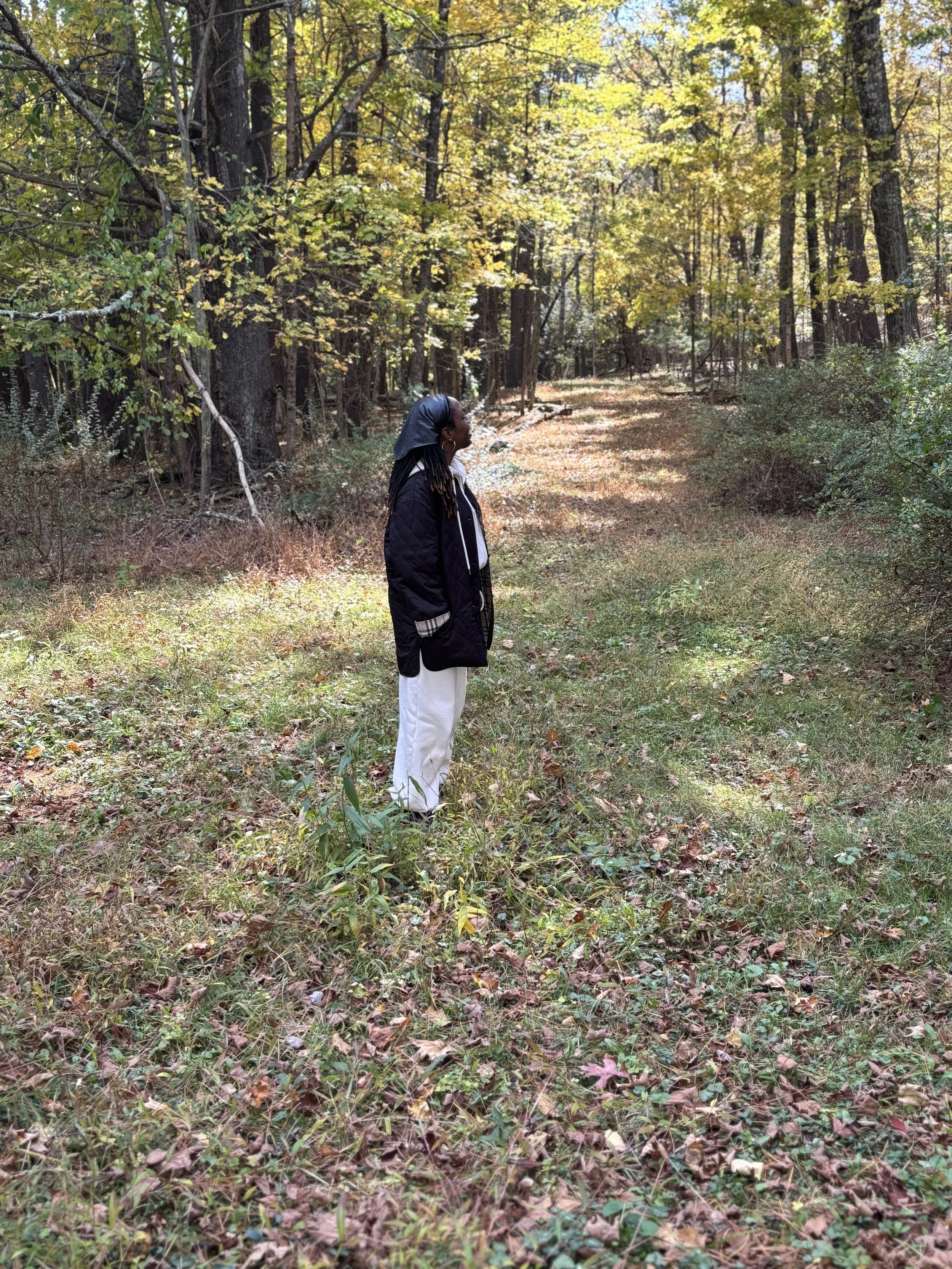
— HOW I WORK —
Your body sends the message long before your mind agrees to hear it.
I'm somatic, attachment, trauma, and IFS-informed. In practice, that means two things.
We pay attention to your body. Not instead of talking — alongside it. I learned that one from the inside, which is why we don't wait for words to catch up.
We treat your patterns as protection, not defects. The part of you that over-functions, that reads every room, that says "I'm fine" before checking — those parts took jobs on early, for good reasons. We find out what they're protecting rather than trying to get rid of them.
And I lead my own life through mindfulness and mind-body connection, which is not a marketing line. It's what I had to build after 2024, and it's what I know how to teach.
— WHAT I BELIEVE —
What I believe about this work
Rest isn't a reward for finishing.
You don't have to earn it. That's a story you were handed, and it can be put down.
You're not broken for adapting.
Everything you do that exhausts you now once kept you safe. That deserves respect before it deserves changing.
Asking for help is a skill, not a personality trait.
Most of my clients were never taught it. It can be learned at any age.
Being the first is heavy.
Cycle breakers carry the weight of both what they left and what they're building. That's worth naming out loud, and worth having somewhere to put.
— OUTSIDE THE ROOM —
When I'm not working
I'm usually thrifting — local vintage stores are a weakness. I travel whenever I can, locally and around the country, almost always with my people. I spend real time with my support network and with my fur-nephew. Otherwise: whatever show everyone's talking about, a podcast on a long walk, a book, a museum on a slow afternoon, time outside, and live music as often as I can get it.
I mention this because I spent years with an answer to "what do you do for fun?" that was really just a list of responsibilities. Building a life that has things in it — that's the work too.
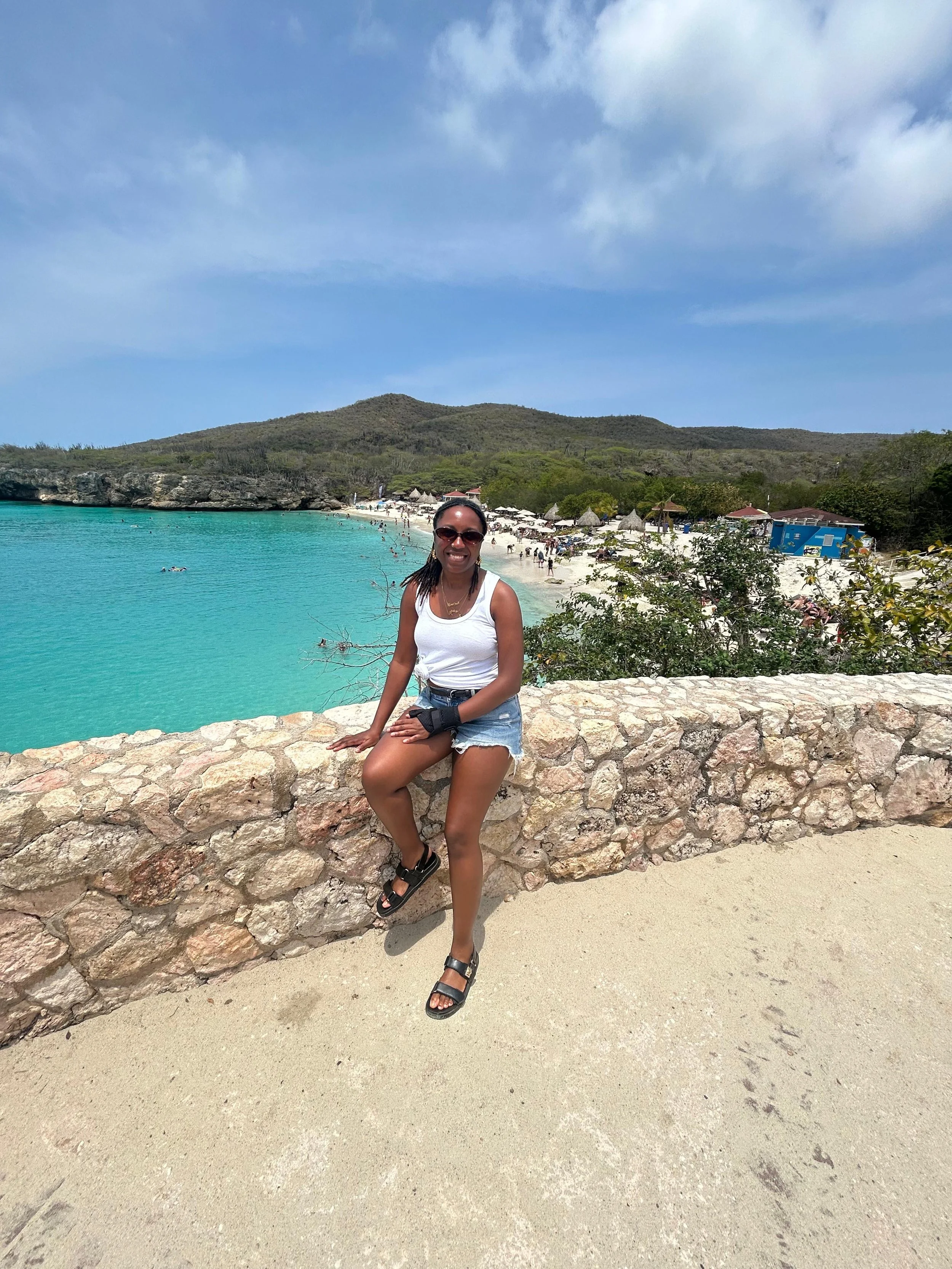
Curaçao. Rest I actually took.
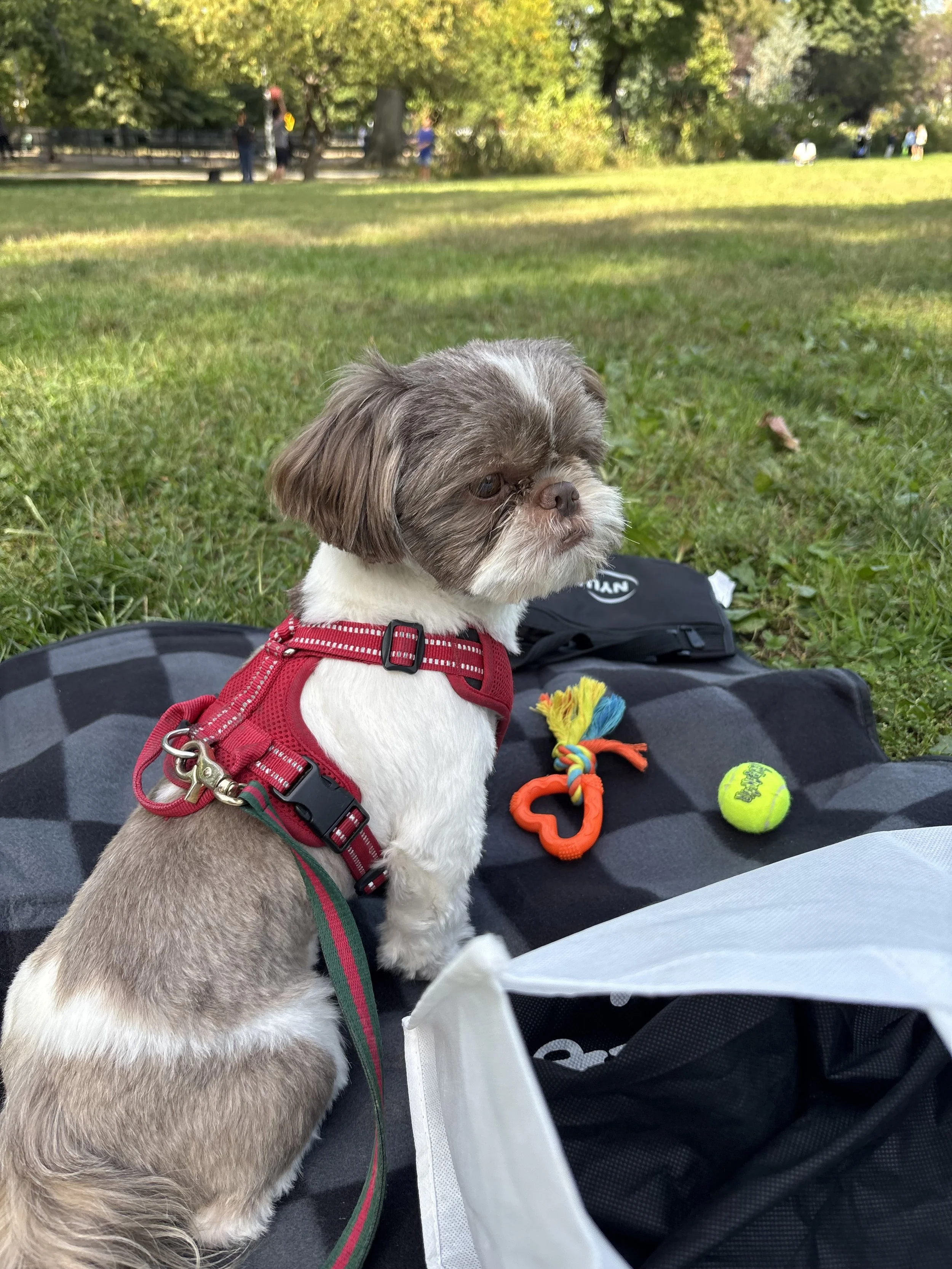
My fur-nephew. Excellent company.
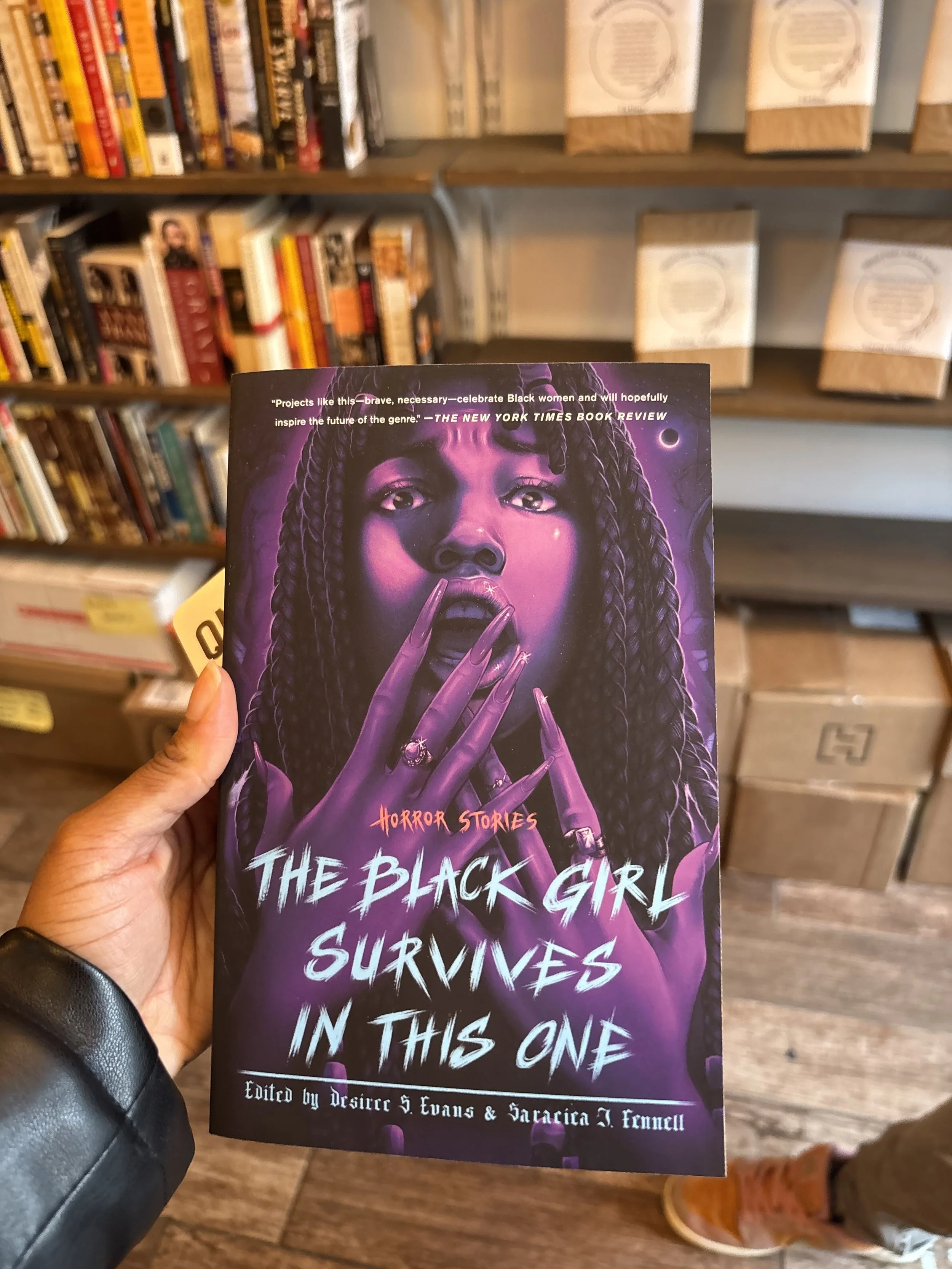
Reading.
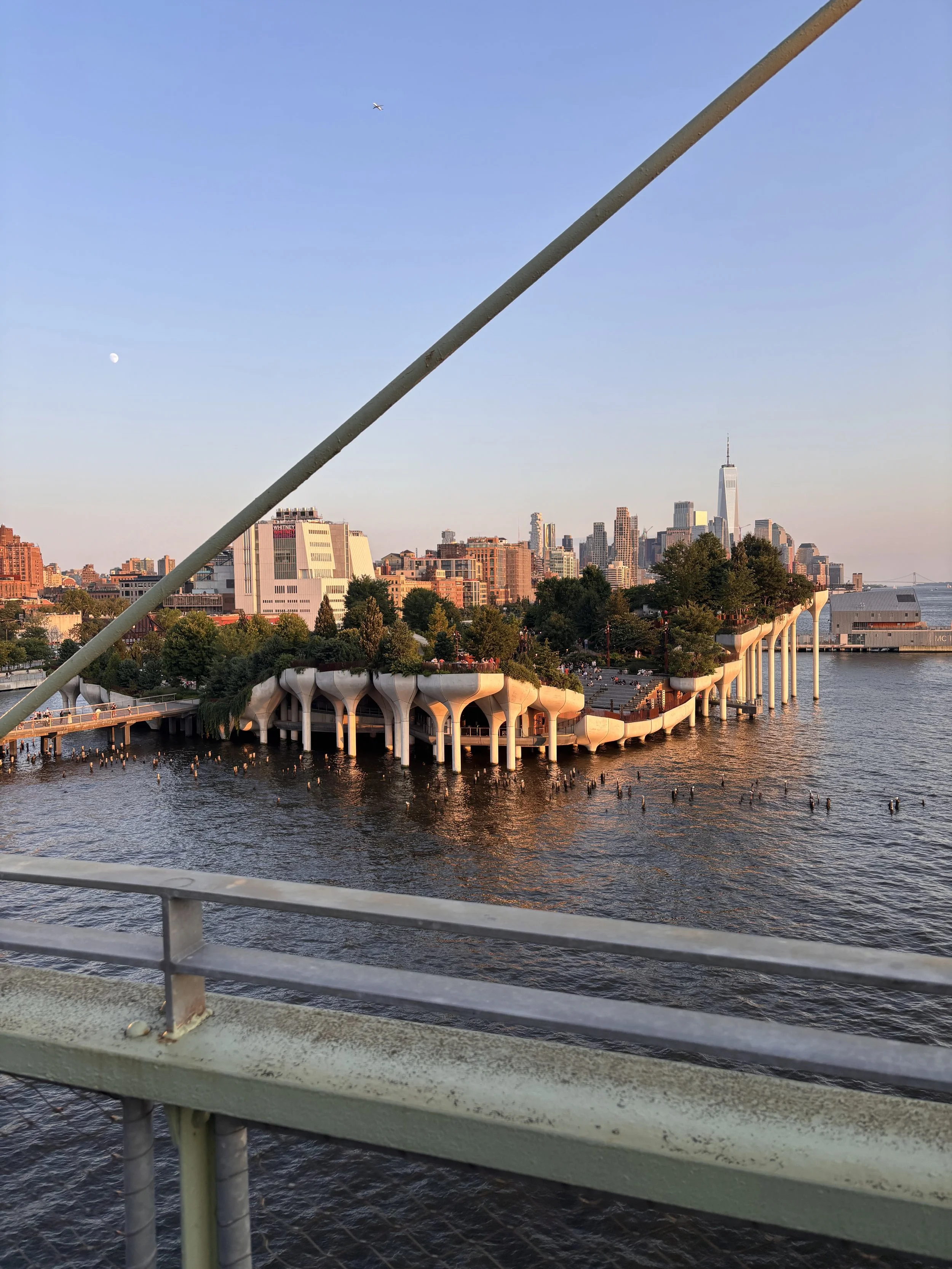
Home, on a good evening.
— CREDENTIALS —
Training and credentials
Jessica Thomas, LMHC, LPC (she/her)
Founder, MyMindset NYC Mental Health Counseling Services, PLLC · In practice since 2017— LICENSURE
Licensed Mental Health Counselor — New York #010802
Licensed Mental Health Counselor — Florida #TPMC6339
Licensed Professional Counselor — Washington D.C. #PRC200002166
NPI #1336615160
Master's in Counseling Psychology, The Chicago School of Professional Psychology
NY State Certified MWBE
Languages: English and Haitian Kreyòl
— Certifications
- IFS-Informed Somatic Trauma Therapy Certificate Program
The Embody Lab · 60 hours · August 2026 - Integrative Somatic Trauma Therapy Certificate Program
The Embody Lab · 60 hours · February 2024 - Decolonizing Therapy for Black Folk
Kindred Community Healing · 2023 - Kreyòl for Clinicians: Beyond Translation
Rebati Sante Mentale University · 2026
230+ hours of continuing education since 2022, concentrated in somatic work, culturally responsive care, trauma, and neurodivergence. New York requires 36 hours per three-year cycle.
See selected trainings
Somatic and body-based
- The Body Can Change the Score: Somatic Interventions for Trauma, Parts 1 & 2 — Alma, 2026
- Somatically Healing Sexual Trauma — Cultivating Healers, 2025
- Complex Trauma: Parts Work, Somatic Psychology and EMDR — PESI, 2022
Parts work and IFS
- Parts Work in Practice: Understanding the Basics of IFS — Cultivating Healers, 2025
- The Unconscious Contract: Exploring Inherited Patterns — Clinicians of Color, 2026
Culturally responsive care
- Beyond the Mask: Treating High-Functioning Women of Color, Parts 1 & 2 — Alma, 2026
- Desire, Dignity, and Deconstruction: Exploring Black Women's Sexuality — Cultivating Healers, Dr. Donna Oriowo, 2026
- "I'm as Tough as My Grandma": Cultural Influences on Resilience to Trauma — Alma, 2026
- Culturally Responsive Mental Health Care in Immigrant Communities — Alma, 2026
- Eldest Daughters, Culture, and Mental Health in Middle Eastern Families — Alma, 2026
- Clinical Work with Asian Americans: Diversity, Complexity and Cultural Resilience — Alma, 2026
- Unpacking the Challenges of Autism in the Black Community — Cultivating Healers
Neurodivergence
- The Neurodivergent Burnout Practitioner Training — 7 hours, 2026
- Beyond the Label: Clarifying Autism, ADHD, and Trauma in Clinical Assessment — Clinicians of Color, 2026
- Neurodivergence & Identity-Centered Practice — Clinicians of Color, 2026
- ADHD Diagnosis Deep Dive, Parts 1 & 2 — Alma, 2026
- Working Therapeutically with ADHD Clients — Alma, 2026
Trauma and complex presentations
- Inherited Wounds: Generational Trauma, Complex PTSD and Borderline Personality Patterns — Cultivating Healers, 2026
- Clinical Application of Neuroscience for PTSD — Alma, 2026
- DBT for PTSD: Integrating Skills and Stabilization Strategies — Alma, 2026
- Understanding the Mystery of Self-Harm Through the Lens of Trauma — Alma, 2026
- Breaking Down Borderline Personality Disorder — The NYMHCA Institute, 2025
- Sex Therapy with Survivors of Childhood Sexual Trauma — Institute for Contemporary Psychotherapy, 2025
- Reproductive Trauma: Infertility and Pregnancy Loss, Parts 1 & 2 — Alma, 2025
Mood, anxiety and emotion regulation
- ACT for Perfectionism — Alma, 2026
- Smiling but Stuck: Understanding High-Functioning Depression — Cultivating Healers, 2025
- Introduction to DBT: Emotion Regulation Skills, Parts I & II — Alma, 2026
- DBT Interpersonal Effectiveness Essentials — Alma, 2026
- Understanding, Diagnosing, and Treating OCD — Alma, 2025
Relationships and repair
- From Rupture to Repair: Using Anger as a Pathway to Deeper Connections — The NYMHCA Institute, 2025
- Overview of Emotionally Focused Therapy — Alma, 2026
- Narcissistic abuse and recovery series, 11 trainings — PESI, 2022
- Clinically Supporting Non-Monogamous Clients — Cultivating Healers, 2023
Affirming care and ethics
- Writing Letters for Gender-Affirming Surgeries — Institute for Contemporary Psychotherapy, 2022
- Smart, Ethical, and Informed: A Therapist's Guide to Using AI in Clinical Work — Alma, 2026
- Identification and Reporting of Child Abuse and Maltreatment — 2025, 2026
— WHENEVER YOU’RE READY —
If any of this sounded familiar
You don't have to arrive with it figured out. Twenty minutes, free, no pressure, you tell me what's going on, and we find out together whether I'm the right person for it.
No waitlist. Most people start within a week.